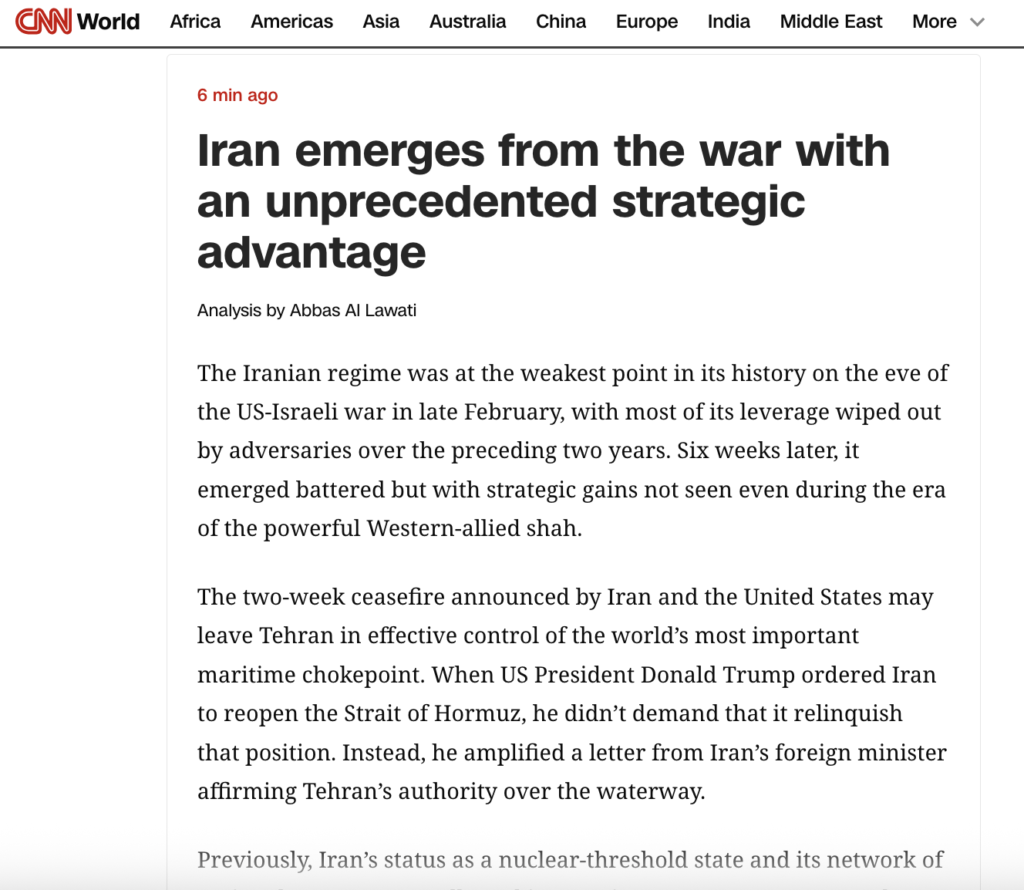
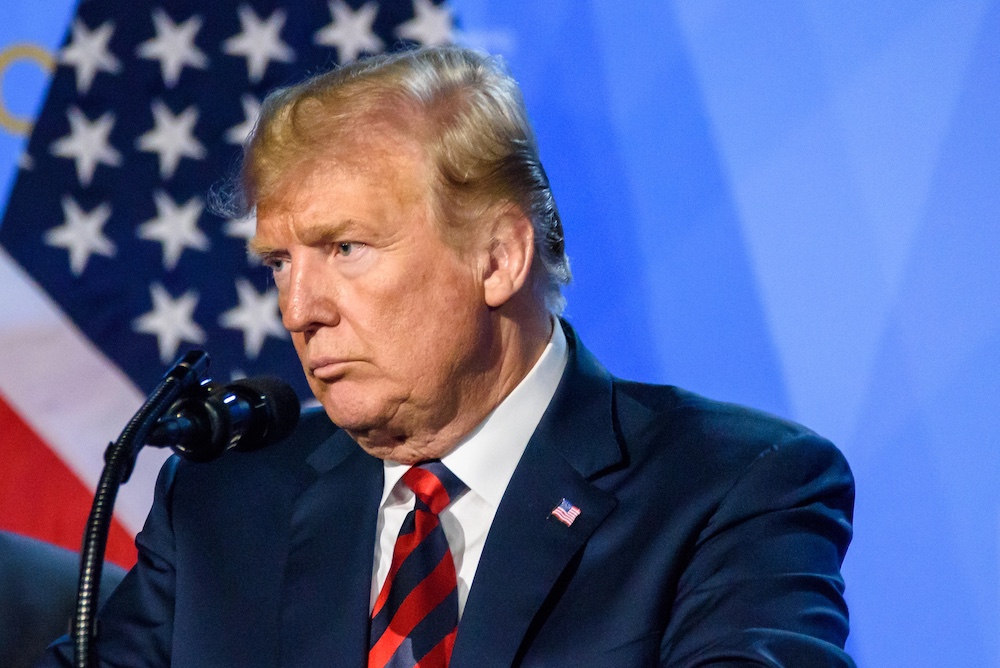

President Trump has attacked CNN for what he called copying a “fake news Nigeria website” in its reporting on the Iran ceasefire deal. The accusation, posted on Truth Social, marks a remarkable moment in the war’s information battle — the President of the United States dismissing his own country’s leading news network by comparing it unfavorably to a Nigerian media outlet.
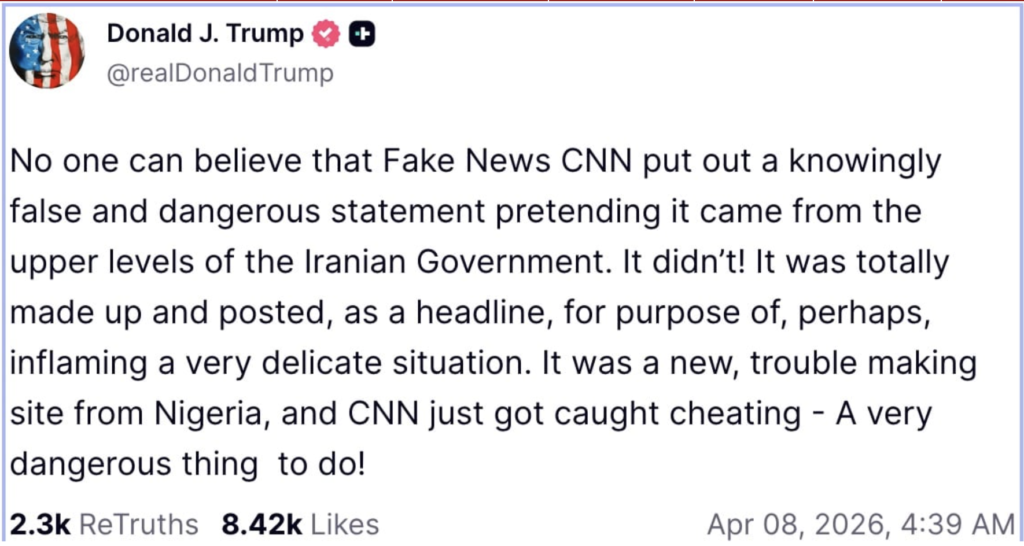
The Cable, a Nigerian news publication, had reported on the framing of the Iran-US ceasefire agreement. CNN subsequently ran coverage that Trump claims mirrored The Cable’s angle — which he characterized as presenting Iran as having achieved a victory in the negotiations.
Trump’s response was characteristically direct. He accused CNN of lifting its narrative from Nigerian media, calling it “fake news” and suggesting that the network’s Iran coverage was designed to undermine the perception of American success in the ceasefire talks.
The irony is layered. Trump is simultaneously claiming victory in the Iran conflict — “Complete and Total Regime Change,” as he posted days earlier — while attacking media outlets for suggesting that Iran may have secured favorable terms in the ceasefire. If the victory is as complete as claimed, the framing of the ceasefire should be irrelevant. The intensity of the president’s reaction to how the deal is being characterized suggests the reality may be more nuanced than the triumph narrative allows.
Related: NewsRescue — A Whole Civilization Will Die Tonight: Trump’s Nuclear Ultimatum
There is something notable about an American president referencing Nigerian media in the context of a global conflict. Nigerian journalism has covered international affairs with depth and independence for decades, often providing perspectives that Western outlets either overlook or actively suppress. That Trump considers Nigerian media significant enough to attack as a source of narrative competition is, in its own way, an acknowledgment of its reach and influence.
The Cable’s original reporting examined whether the ceasefire terms, as they emerged, represented a strategic outcome more favorable to Iran than the US administration’s rhetoric would suggest. This is standard journalism — examining the gap between what leaders say and what agreements actually contain. It is the kind of analysis that every serious news outlet conducts after every major diplomatic development.
That CNN pursued a similar line of analysis is not evidence of copying. It is evidence that the same facts lead independent observers to similar conclusions. When multiple outlets across different continents reach the same assessment, the more likely explanation is that the assessment is accurate — not that there is a conspiracy of Nigerian and American journalists coordinating fake news.
Related: NewsRescue — Sanders Calls for 25th Amendment Removal Amid Iran War
The president’s attack on CNN by way of Nigerian media reveals more about the state of the information war than about the quality of either outlet’s reporting. Six weeks of conflict, thousands dead, a ceasefire now on the table — and the president’s priority is to control how the outcome is perceived rather than to address its substance.
The ceasefire terms will eventually become public. The gap between the claimed victory and the actual agreement will be measured and documented. No amount of attacking CNN or Nigerian media will change what the text of the deal says. It will speak for itself.
RELATED: