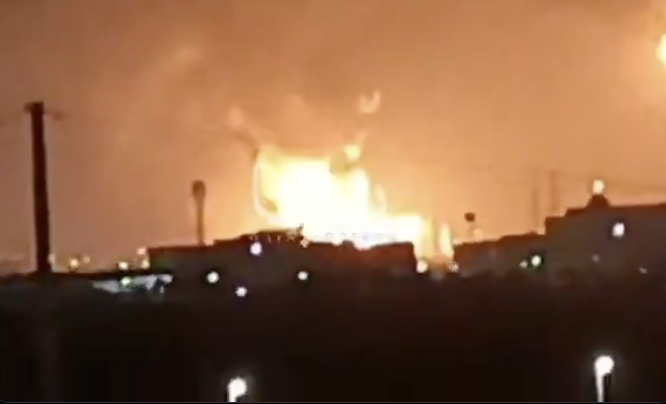
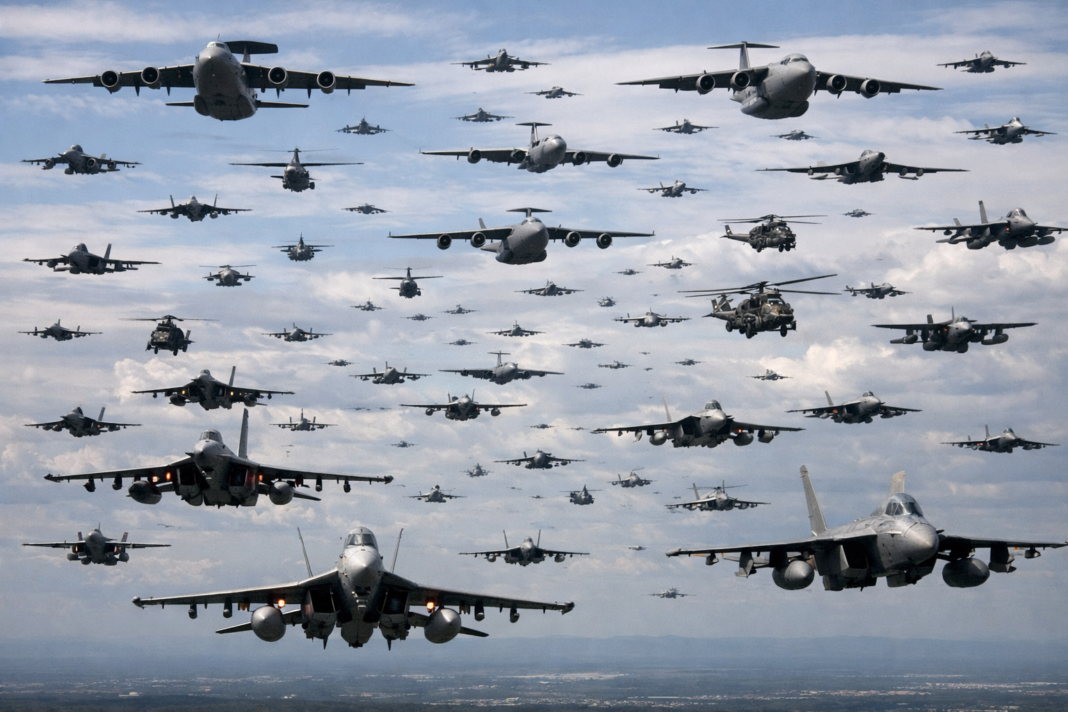

The US military launched what it describes as one of the largest combat rescue operations since Vietnam — deploying 155 aircraft and hundreds of special operations troops, including Navy SEAL Team 6 commandos, to extract a single downed American pilot from Iranian territory. The mission succeeded. The pilot was recovered alive. No American lives were lost in the extraction.
The scale of the operation tells its own story. Four bombers. Sixty-four fighter jets. Forty-eight refueling tankers. Thirteen specialized rescue aircraft. Hundreds of special operations personnel inserted into hostile territory. This was not a routine recovery. This was a wartime extraction from a country that had placed a bounty on the pilot and mobilized millions of citizens to find him.
The material cost was significant. At least two US transport planes became disabled at a remote Iranian air base during the extraction and were deliberately destroyed by American commanders to prevent them from falling into enemy hands. Two Black Hawk helicopters were struck by Iranian fire. An A-10 Warthog attack plane was hit but managed to limp back to Kuwaiti airspace, where its crew ejected.
Related: NewsRescue — Trump Escalates, Iran Says Delusional Threats Won’t Hide Humiliation
The operation succeeded in its primary objective — the pilot is alive. But the destruction of American aircraft on Iranian soil, the damage to multiple helicopters and a combat jet, and the sheer volume of assets required to extract one person raise questions about the sustainability of air operations over Iran that the Pentagon has been reluctant to address publicly.
President Trump, rather than focusing on the operational implications, used the incident to target the media. He demanded that the journalist who reported the pilot’s downing be jailed, calling the person “a sick person” and a “leaker.”
“So actually, the country Iran put out a major notice — you all saw it — offering a very big award for anybody that captures the pilot,” Trump said. “So in addition to a hostile, very talented, very good, very evil military, we had millions of people trying to get an award. So when you add that to it, we have to find that leaker, because that’s a sick person.”
The conflation is instructive. A journalist reported a fact. Iran used that fact. And the president’s response is to criminalize the reporting rather than address the vulnerability that the fact revealed: American pilots are being shot down, and recovering them requires an operation of Vietnam-era scale and cost.
Related: NewsRescue — Israel Kills Iranian Intel Chief as Saudi Oil Hub Burns
The rescue operation confirms what Iran has been claiming and what US intelligence has been quietly acknowledging: Iran’s air defense network has not been neutralized. American aircraft operating over Iranian territory face real, lethal risk. The loss of multiple airframes in a single extraction mission — however successful — demonstrates that the air superiority Washington claims is contested in ways the public narrative has not fully reflected.
One pilot rescued. 155 aircraft deployed. Multiple airframes destroyed or damaged. And the president wants to jail the journalist who told the public it happened. The priorities embedded in that sequence require no editorial commentary. They speak for themselves.