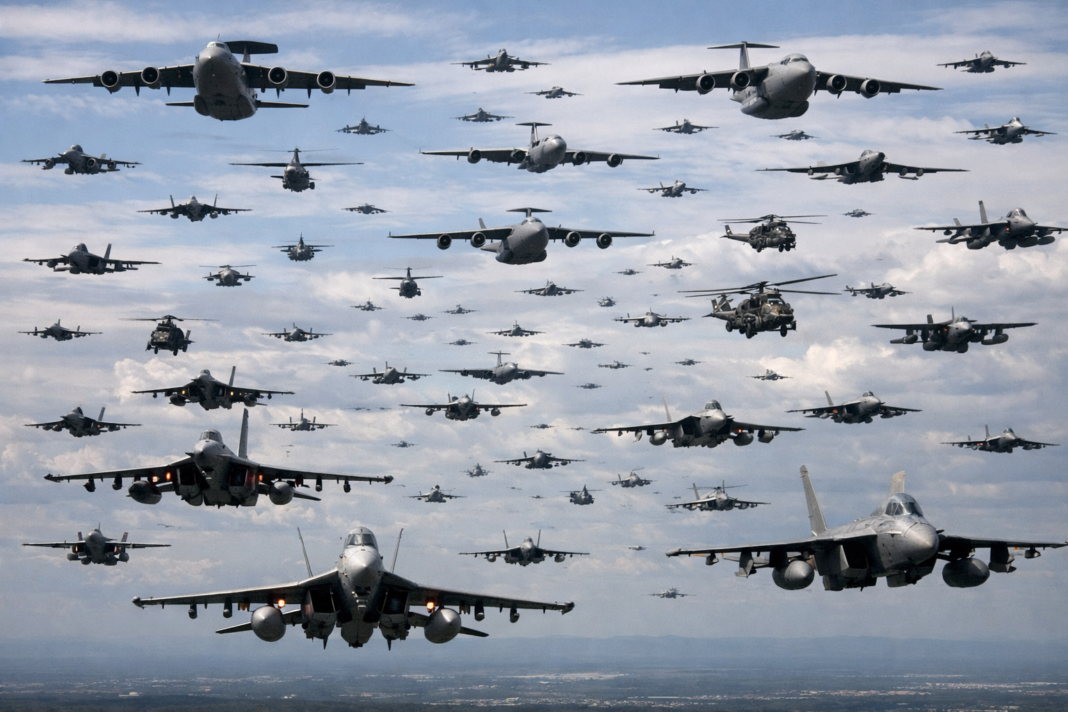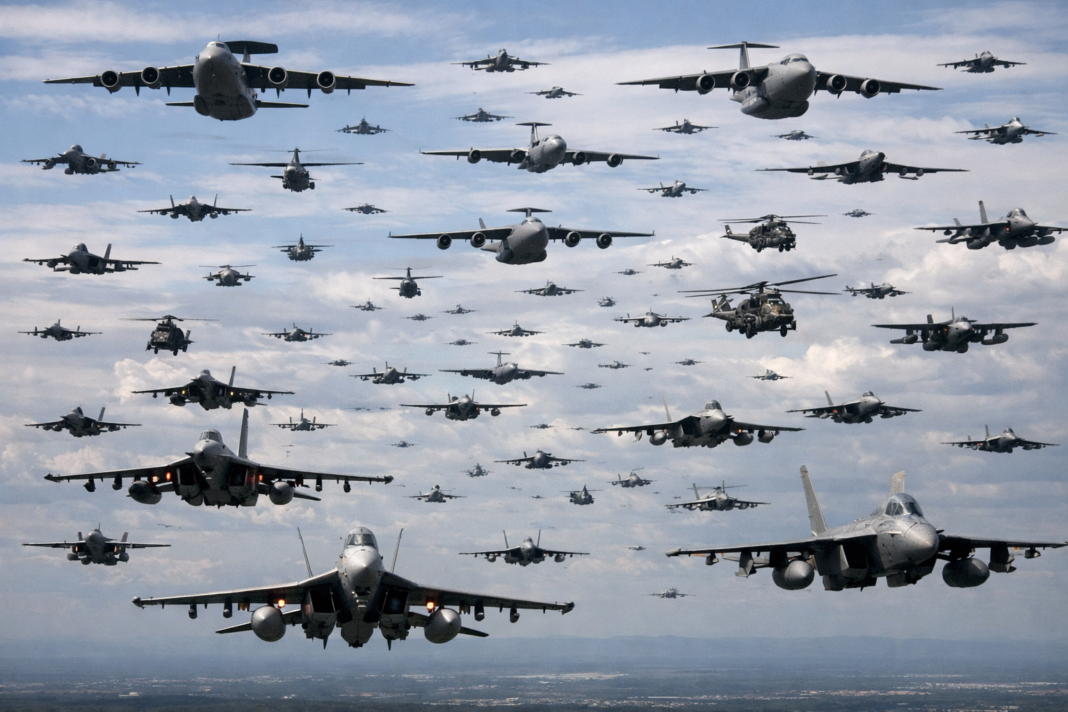
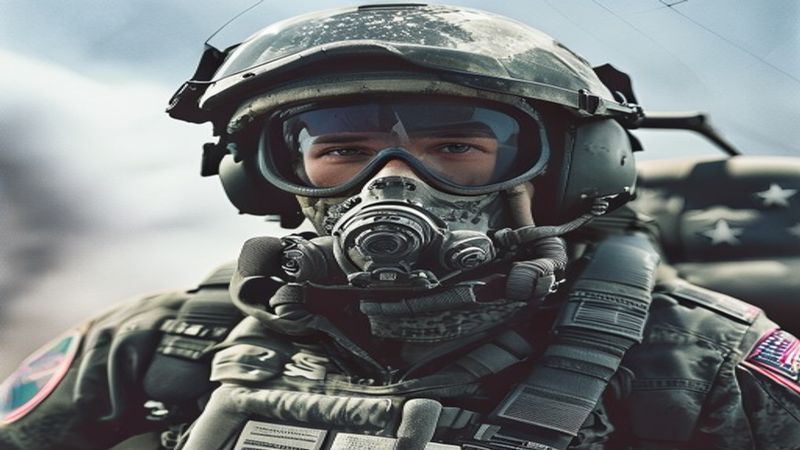

An airman. That is all the American public has been told. Not a name. Not a rank beyond the generic. Not a hometown, not a unit, not a face. The most expensive rescue operation since Vietnam — 155 aircraft, Navy SEAL Team 6, hundreds of special operations personnel — and the individual at the center of it remains anonymous.
Every major outlet uses the same careful language. CNN calls him “the downed US airman.” The New York Times refers to “the pilot.” Fox News says “the American service member.” The Pentagon press briefings use “the airman” without elaboration. Reuters and AP follow the same pattern — no name, no rank, no identifying details beyond the fact that this person was flying an aircraft over Iran and was shot down.
This is unusual. When Captain Scott O’Grady was shot down over Bosnia in 1995, his name was public within hours. When Chief Warrant Officer Michael Durant was captured in Mogadishu in 1993, the world knew who he was before the rescue was complete. When Lieutenant Commander Scott Speicher’s jet went down in Iraq in 1991, his name and photo were on every front page. In each case, the identity of the downed pilot was part of the story — and in several cases, the public identification became part of the pressure campaign to secure their return.
This time, silence.
The rescue itself was an operation of extraordinary scale. Four bombers. Sixty-four fighter jets. Forty-eight refueling tankers. Thirteen specialized rescue aircraft. SEAL Team 6 commandos inserted on the ground. The Pentagon committed an armada to retrieve this one individual — and in the process lost at least two transport planes (deliberately destroyed on an Iranian air base to prevent capture), sustained hits on two Black Hawk helicopters, and had an A-10 Warthog damaged badly enough that its crew ejected over Kuwait.
Related: NewsRescue — 155 Aircraft, SEAL Team 6 Deployed to Rescue Downed Pilot
President Trump has seized on the rescue as a unifying moment. “I hope this brings the country together,” he said, framing the operation as a demonstration of American resolve and commitment to its service members. The political motivation is transparent — the war is losing support domestically and internationally. Polls show declining approval for the Iran campaign. Allies are distancing themselves. France refused airspace access. The Strait of Hormuz remains blocked. Oil is at $135. Twenty-six million East Africans face famine as a downstream consequence.
Trump needs a victory narrative. A downed pilot rescued against impossible odds, with SEAL Team 6 flying into hostile territory — this is the kind of story that Hollywood would script. And the president is directing it accordingly, demanding that the journalist who first reported the pilot’s downing be jailed for endangering the mission, while simultaneously promoting the rescue as evidence that the war is being conducted competently.
Iran tells a different story. Tehran claims the American rescue mission failed in its broader objectives — that the US aircraft destroyed on the Iranian air base were not deliberately scuttled but were disabled by Iranian fire, that additional American equipment was captured, and that the operation exposed fundamental vulnerabilities in US force projection over Iranian territory. Iranian state media has broadcast footage purporting to show wreckage of American aircraft. The Pentagon has not directly addressed Tehran’s claims beyond confirming that the pilot was recovered alive.
The competing narratives are expected. What is not expected is the anonymity.
When rescue operations succeed, the military typically celebrates the individual. The name becomes a symbol — of courage, of the bond between service members, of the principle that America does not leave its people behind. Families are interviewed. Hometowns hold vigils and then celebrations. The rescued individual becomes, however briefly, a national figure.
None of that has happened. No name. No family statements. No hometown identified. No unit. No rank beyond “airman.” For an operation that the president wants to use as a political unifying moment, the absence of a human face at the center of the story is conspicuous.
The obvious question: why?
There are limited explanations that fit the available facts. The individual may be involved in classified operations — an intelligence officer rather than a conventional pilot. The aircraft may have been conducting surveillance or electronic warfare missions that the Pentagon does not want to acknowledge publicly. The individual’s rank or role may reveal information about the nature of US air operations over Iran that the military considers operationally sensitive.
Or the individual may be more senior than “airman” suggests. A colonel conducting a command-and-control mission. A specialist whose role, if identified, would reveal the targeting architecture of the air campaign. Someone whose public identification would answer questions that the Pentagon would prefer remain unasked.
Related: NewsRescue — Trump Escalates, Iran Says Delusional Threats Will Not Hide Humiliation
One hundred and fifty-five aircraft were deployed. SEAL Team 6 was committed. Multiple airframes were lost. The president wants the nation to celebrate. And the person at the center of all of it has no name, no face, and no public identity.
Every previous rescue operation in American military history has produced a name. This one has produced a noun: airman. Until the Pentagon explains why this individual cannot be identified — or until the individual’s identity emerges through other channels — the gap between what the public is being asked to celebrate and what the public is being allowed to know will continue to widen.
An airman. That is all they will say. The question is why that is all they will say.