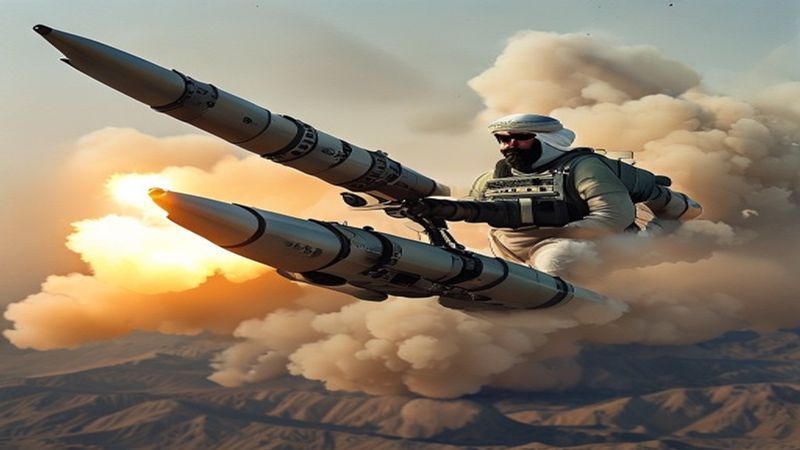
Iran’s Islamic Revolutionary Guard Corps has deployed twin missile launch systems for the first time in the conflict, according to PressTV. The deployment represents a significant escalation in Iran’s retaliatory capability — doubling the rate of fire from each launcher position and complicating the US-Israeli missile defense calculus.
The twin-launch systems allow two missiles to be fired simultaneously from a single mobile platform, reducing the time between salvos and increasing the saturation load on interceptor systems such as Israel’s Arrow and the US THAAD batteries deployed in the region. Missile defense operates on a ratio — the number of interceptors required per incoming threat. Doubling the launch rate from each position shifts that ratio in Iran’s favor.
The timing of the deployment is deliberate. It comes as the US and Israel are conducting their most intensive strikes yet against Iranian infrastructure — hitting railways, bridges, highways, and military installations across the country simultaneously. The IRGC is signaling that despite six weeks of sustained bombardment, Iran retains the capacity not only to retaliate but to introduce new offensive systems into the fight.
Related: NewsRescue — Israel Strikes Railways, Bridges, Highways Across Entire Iran
This directly contradicts the White House claim of 90 percent degradation of Iran’s launch capability. US intelligence agencies have assessed the actual figure closer to 50 percent. The deployment of previously unseen twin-launch systems suggests Iran was holding back capability in reserve — a standard military doctrine of deception that involves absorbing initial strikes while preserving advanced systems for later phases of the conflict.
The IRGC’s strategy appears to be one of sustained attrition rather than decisive engagement. Iran cannot match American and Israeli firepower in a direct exchange. But it does not need to. It needs to demonstrate that the cost of continuing the war exceeds what the attackers are willing to pay — in aircraft lost, in oil disrupted, in regional allies drawn into the conflict, in global economic damage, and in the political cost of a war without end.
Related: NewsRescue — Pentagon Intelligence Says Only Half of Iran’s Weapons Destroyed
The twin-launch deployment is also a message to the countries hosting US forces in the region. Kuwait has already suffered a drone strike on an oil refinery and 15 injured American troops. Saudi Arabia’s oil infrastructure has been hit. Every new Iranian capability introduced into the conflict expands the threat envelope for regional states that allowed their territory to be used as a staging ground for attacks on Iran.
Six weeks into this war, Iran is deploying new weapons systems rather than running out of them. The implications for the duration and trajectory of this conflict are significant — and they are not the implications that Washington has been selling to the American public.