
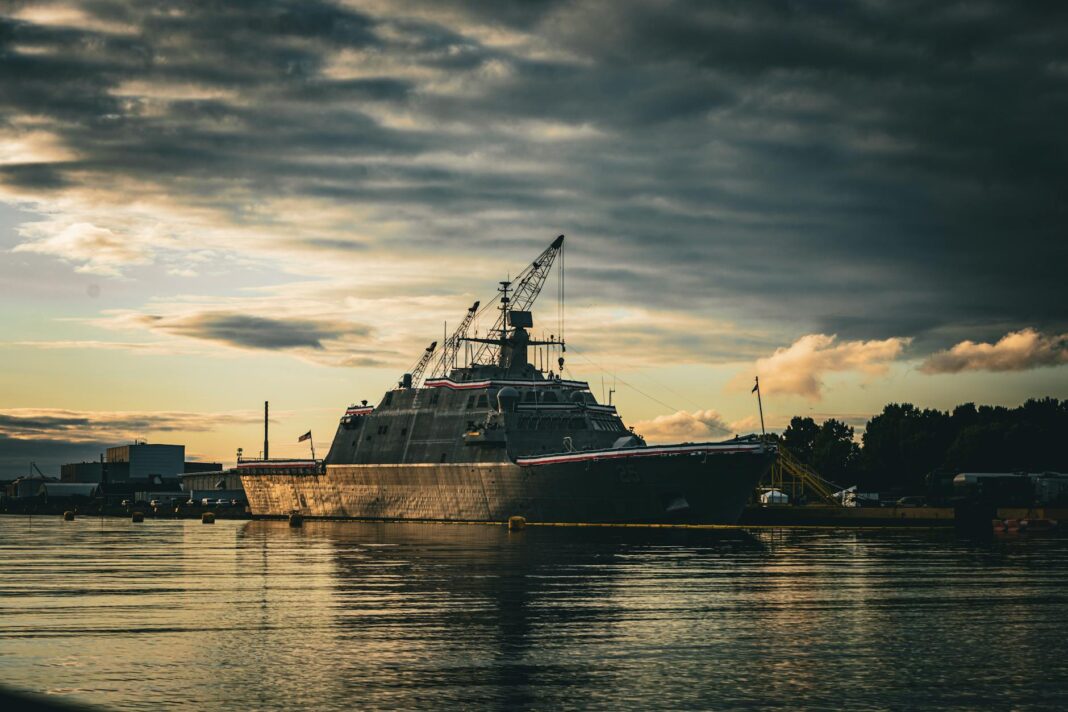

Twenty-one hours. That is how long the most consequential diplomatic engagement between the United States and Iran since 1979 lasted before it ended without an agreement, without a framework, and without a path forward. What followed was not a cooling-off period or a diplomatic reassessment. It was a naval blockade.
“Effective immediately,” President Trump announced, “the United States Navy will begin the process of BLOCKADING any and all Ships trying to enter, or leave, the Strait of Hormuz.”
Oil surged eight percent. US crude pushed past $104 per barrel. And the question that will define the coming weeks crystallized: were the Islamabad talks a genuine attempt at resolution, or were they the prelude to a military escalation that was always the intended destination?
The Talks
The marathon session in Islamabad, mediated by Pakistan, represented the highest-level direct engagement between American and Iranian officials in nearly half a century. Vice President JD Vance, special envoy Steve Witkoff, and senior advisor Jared Kushner led the American delegation. Iranian President Mohammad Bagher Ghalibaf and Foreign Minister Abbas Araghchi represented Tehran.
According to Vance, the central sticking point was Washington’s demand for an “affirmative commitment” that Iran would not seek a nuclear weapon. Iran, which has long maintained that its nuclear program is peaceful, apparently declined to provide the specific assurances the US delegation required. Both sides blamed the other for the collapse.
But in the hours before the talks fell apart, a revealing discrepancy emerged. Iran claimed that the United States had agreed to release $6 billion in frozen Iranian assets. The US denied this. Whether the claim was a negotiating tactic, a misunderstanding, or an attempt to create public pressure is unclear. What is clear is that the two sides were not operating from a shared understanding of what had been discussed, which raises questions about whether they ever were.
The Blockade
The speed of the transition from diplomacy to military action is worth examining carefully. A naval blockade of the Strait of Hormuz is not an improvised response. It requires pre-positioning of naval assets, coordination with allied forces, and logistical planning that takes weeks if not months. The announcement came hours after the talks ended.
This timeline suggests one of two things. Either the administration had prepared for the possibility of failure and had a blockade plan ready as a contingency, or the blockade was the intended outcome regardless of how the talks concluded, and the diplomatic engagement was designed to provide political cover for a military action that was already in motion.
The distinction matters enormously. If the blockade was a contingency, it represents an aggressive but rational escalation in response to failed diplomacy. If it was the plan all along, then Islamabad was theater, and the twenty-one hours of talks were a performance staged for an audience of allies and domestic voters who needed to believe that diplomacy had been exhausted before force was employed.
The Economic Shock
The Strait of Hormuz carries approximately twenty percent of the world’s daily oil supply. A blockade does not merely affect Iran. It affects every nation that depends on Gulf oil, which is to say virtually every major economy on earth. The eight percent surge in oil prices within hours of the announcement is a preview of the economic disruption a sustained blockade would produce.
At $104 per barrel, American consumers are already feeling the impact. If the blockade holds and prices continue to rise, the economic consequences will extend far beyond energy markets. Supply chains, manufacturing costs, food prices, and inflation projections will all be affected. The administration that promised economic revival through energy dominance is now implementing a policy that could drive global energy costs to levels not seen since the worst months of 2022.
The Pattern
There is a pattern in American foreign policy that repeats with troubling regularity. Diplomatic engagement is initiated with public fanfare. Demands are presented that the other party cannot or will not accept. The talks fail. Military action follows, justified by the claim that all peaceful options were exhausted. The question is never whether the talks happened. The question is whether they were designed to succeed.
Twenty-one hours of the most significant diplomatic contact in half a century, followed immediately by a naval blockade of the world’s most strategically vital waterway. The administration says it tried diplomacy and diplomacy failed. The timeline suggests something less straightforward. And the price of oil, climbing by the hour, is indifferent to which version is true.