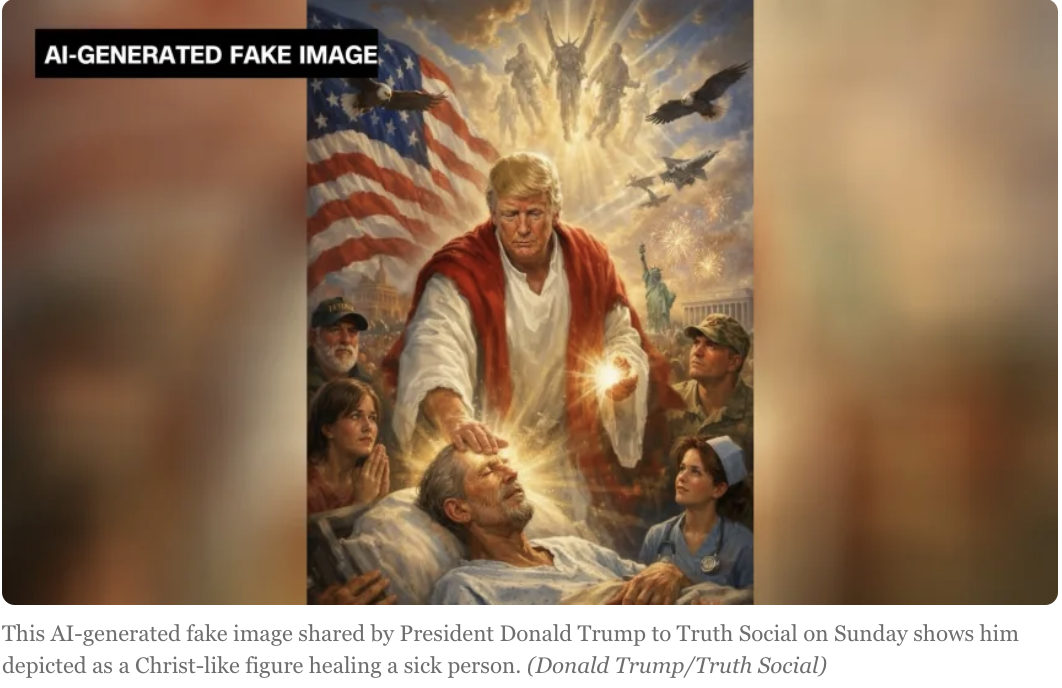

There is a particular kind of spectacle that unfolds when a man who has built his political identity around defending Christianity finds himself at war with the head of the world’s largest Christian denomination. Not over theology. Not over doctrine. Over whether it is acceptable to bomb civilians.
President Donald Trump took to Truth Social this week to deliver a broadside against Pope Leo XIV that would have been extraordinary in any era of American politics, but is especially remarkable coming from a president who has repeatedly cast himself as the protector of Christian values in the West. The Pope, Trump declared, is “WEAK on Crime, and terrible for Foreign Policy.” He added, pointedly, that he does not “want a Pope who criticizes the President.”
The Origin of the Dispute
The confrontation was triggered by Pope Leo’s public condemnation of Trump’s threat to destroy Iranian civilization, which the pontiff called “truly unacceptable.” The Pope went further, challenging the theological foundations of the administration’s militarism directly. “God does not listen to the prayers of those who wage war,” he said, a statement that landed as a rebuke to Defense Secretary Pete Hegseth, who had publicly prayed for military victory. “God does not bless any conflict,” the Pope added.
For a president who has cultivated evangelical support as a cornerstone of his coalition, being told by the Bishop of Rome that God does not hear the prayers of warmakers presents a unique political problem. The response was not reflection. It was escalation.
The Personal Turn
Speaking aboard Air Force One, Trump was blunt: “I’m not a big fan of Pope Leo.” He called the pontiff “a liberal person” and claimed that Leo had been selected as pope solely because he is American, chosen as “the best way to deal with President Donald J. Trump.” He even expressed a preference for the Pope’s brother, Louis, whom Trump described as a pro-Trump figure.
The suggestion that the College of Cardinals selected a pope primarily as a response to an American president is worth pausing on. It requires believing that an institution that has existed for two millennia, survived the fall of empires and the rise of nation-states, oriented its most consequential decision around the temperament of one political leader. Whether this reflects confidence or something else is a question worth considering.
Trump also outlined the specific policy disagreements driving his hostility. He does not want a pope, he said, who thinks it is acceptable for Iran to possess a nuclear weapon, or who thinks it is “terrible that America attacked Venezuela.” In other words, the president’s objection is not that the Pope has entered the political arena. It is that the Pope has entered the political arena on the wrong side.
A Pattern Worth Examining
What makes this confrontation particularly instructive is the underlying logic. The president has long presented himself as Christianity’s champion against secular progressivism. His administration has courted religious leaders, invoked faith in policy debates, and positioned itself as the defender of believers against a hostile cultural establishment. Yet when the leader of 1.4 billion Christians offered a moral judgment rooted in the most basic teachings of the faith he leads, the response was not engagement but denunciation.
Is the commitment to Christianity conditional on Christianity remaining silent when power acts? Does defending the faith require the faith to never defend its own principles when they conflict with policy? These are not rhetorical traps. They are the questions that this confrontation forces into the open.
Pope Leo XIV said that bombing civilians is wrong. For that, the President of the United States called him weak, liberal, and unfit for his office. And somewhere in the space between those two positions, a very old question reasserts itself: when a leader claims to serve both God and power, which one yields when the two disagree?
The answer, this week at least, was unambiguous.