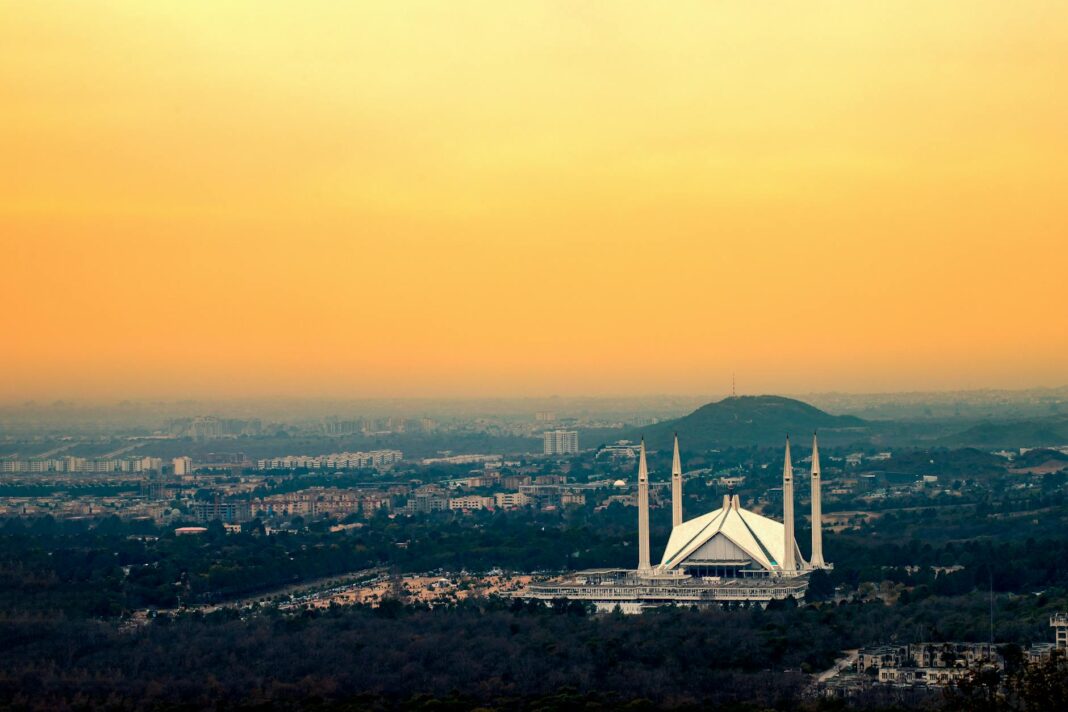

There is something almost cinematic about the scene unfolding in Islamabad this week. JD Vance, a man who has been Vice President of the United States for barely six weeks, touched down in Pakistan’s capital on April 11 flanked by Steve Witkoff and Jared Kushner — the son-in-law turned shadow diplomat whose fingerprints have been on Middle East policy since his father-in-law’s first term. Waiting across the table, in what represents the highest-level direct engagement between Washington and Tehran since the 1979 Islamic Revolution, sat Iran’s Parliament Speaker Mohammad Bagher Ghalibaf, Foreign Minister Abbas Araghchi, Supreme National Security Council Secretary Ali Akbar Ahmadian, and Central Bank Governor Hemmati.
Is this the dawn of a diplomatic breakthrough, or the most expensive photo opportunity of the decade?
The Weight of the Moment
Pakistan’s Prime Minister Shehbaz Sharif is hosting the talks, positioning Islamabad as a neutral mediating ground — a role Pakistan has quietly pursued for years but never secured at this level. The American delegation extends well beyond the headline names: officials from the National Security Council, the State Department, and the Defense Department have all made the trip. When that many agencies send representatives to a single negotiation, the message is clear — this is not a courtesy call.
CNN described the Islamabad talks as the toughest assignment of Vance’s career, noting that the outcome will inevitably shape his political future. Axios, with characteristic bluntness, framed it differently: “JD is going to the Super Bowl.” Both characterizations may be accurate. The question is whether anyone has studied the playbook carefully enough to know what winning actually looks like.
The Road to Islamabad
This meeting did not materialize from thin air. Kushner had already conducted three rounds of indirect talks with Iranian counterparts before the February 28 conflict began — a detail that complicates the narrative of sudden escalation followed by sudden diplomacy. If back-channel communication was already underway, what changed? And if the channels existed, why did they fail to prevent the war that both sides now say they want to resolve?
These are not rhetorical flourishes. They are the questions that determine whether Islamabad produces a framework for peace or a framework for the next round of hostilities dressed in diplomatic language.
The Vance Factor
Vance arrived with a warning that has since ricocheted across diplomatic circuits: “If Iranians try to play us, they’ll find the negotiating team is not receptive.” The statement carries the hallmark of a politician who understands that tough talk plays well at home, but it also reveals something about the administration’s posture. They came to Islamabad expecting to be tested.
And perhaps they should. Iran’s delegation is not composed of junior officials sent to take notes. Ghalibaf, Araghchi, and Ahmadian represent the full institutional weight of the Islamic Republic’s decision-making apparatus. The presence of Central Bank Governor Hemmati signals that sanctions relief and frozen assets will be central to whatever framework emerges — or fails to emerge.
The Kushner Question
For observers of American foreign policy, Kushner’s presence at the table raises its own set of considerations. His role during the first Trump administration — the Abraham Accords, the Saudi relationship, the marginalization of Palestinian concerns — drew both praise and criticism in roughly equal measure. That he now sits beside the Vice President in the most consequential diplomatic engagement since Camp David suggests that the administration views his regional relationships as an asset rather than a liability.
Whether Tehran shares that assessment is another matter entirely.
What Comes Next
The world has watched American administrations announce breakthroughs before — frameworks that dissolve on contact with reality, handshakes that lead nowhere, summits that produce communiques no one honors. The distance between a successful negotiation and a successful peace is vast, and it is measured not in photographs but in sustained commitment.
Vance, Kushner, and the sprawling American delegation have arrived in Islamabad with ambition. Iran has arrived with demands. Pakistan has offered its capital as a stage. What remains to be seen is whether anyone has brought the one thing these talks actually require: a willingness to concede something real.
The cameras are rolling. The question is whether this is history being made, or history being performed.