
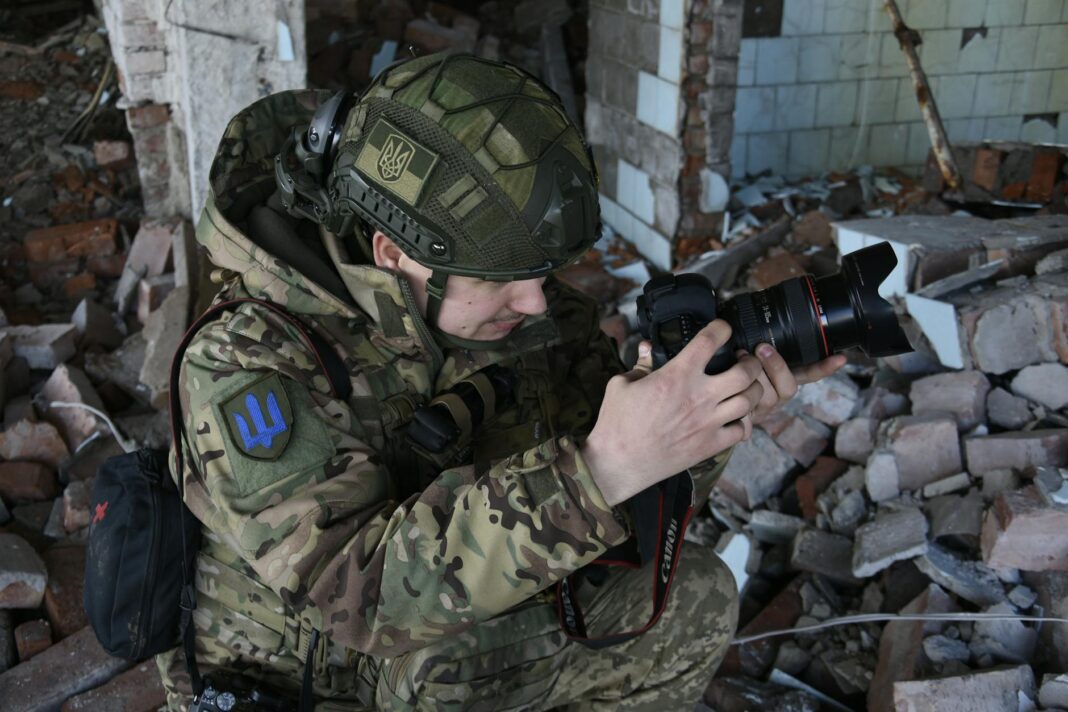

In the summer of 2023, the world watched Ukraine’s much-hyped counteroffensive grind to a halt across the Zaporizhzhia front, producing modest territorial gains at enormous cost and handing Russia a propaganda victory that echoed for months. So when Ukraine launched another offensive in the same sector in late January 2026 — and actually succeeded — the decision was made to say nothing about it. The question is: succeeded at what, exactly, and for how long?
The Offensive That Wasn’t Announced
Beginning January 29, 2026, Ukraine’s DShV air assault infantry initiated a series of operations across the Zaporizhzhia sector that would ultimately recapture more than 400 square kilometers of territory. In a single month, the air assault forces alone retook 285.6 square kilometers — a figure that quietly surpassed the total territorial gains of the entire 2023 counteroffensive that had consumed billions in Western military aid and dominated global headlines for months.
But this time, there were no press conferences. No dramatic maps on CNN. No Zelenskyy addresses touting the advance. The Ukrainian military and its government made a deliberate, strategic decision to suppress public messaging about the operation, determined not to repeat the catastrophic overpromising of 2023, when expectations were set so high that a genuine military achievement was perceived globally as a failure.
The silence worked, tactically. But it also meant that the most significant Ukrainian territorial gain in over two years went largely unnoticed by the international public whose support Ukraine desperately needs to sustain.
The Starlink Factor
One element that aided the January offensive has received almost no public analysis. In February, Starlink access was blocked for Russian military units operating in the theater — a development that reportedly involved cooperation between Elon Musk’s satellite network and Ukraine’s Defense Minister Mykhailo Fedorov. The implications are extraordinary: a private American corporation’s infrastructure decisions directly influenced battlefield outcomes in a European land war. Whether this represented a principled stance, a commercial calculation, or a quiet arrangement with Kyiv, the fact remains that communications disruption gave Ukrainian forces a tangible operational advantage during a critical window.
How comfortable should anyone be with the knowledge that satellite internet access — controlled by a single individual with his own geopolitical interests — can tip the balance of a war?
The Reversal
The gains did not hold. Russian forces subsequently recaptured Huliaipole, a strategically significant town in the Zaporizhzhia region, and Ukrainian momentum stalled. According to reporting by Meduza, the concentration of forces required for the southern push came at a cost: other sectors of the front were weakened, and Russia exploited the resulting gaps.
This is the part of the story that neither side wants told in full. Ukraine does not want to acknowledge that a successful offensive was followed by a significant reversal. Russia does not want to acknowledge that the offensive happened at all — the Institute for the Study of War, ISW, documented how Russian state media invented a narrative about a fictional “Ukrainian counteroffensive” specifically to pre-explain territorial losses that Moscow’s own advance reports had previously denied were possible.
Both belligerents, in other words, are engaged in parallel information suppression about the same series of events, for opposite reasons. Ukraine hides its successes to manage expectations. Russia hides its failures to maintain domestic morale. The result is that the international public — the people whose governments are funding this war, whose economies are absorbing its consequences — are left with an information vacuum filled by propaganda from both directions.
The Lull Before What?
The current situation along the Zaporizhzhia front is described as a relative lull, but analysts widely expect a major Russian offensive in the coming weeks. The question is whether Ukraine’s brief, unreported success bought it any lasting strategic advantage — repositioned forces, degraded Russian logistics, intelligence gathered during the advance — or whether the territory gained and lost was simply another chapter in a war of attrition where both sides measure progress in meters and casualties.
There is something deeply troubling about a conflict in which the most significant military development in two years is deliberately hidden from public view by the side that achieved it. It suggests a war in which information management has become as important as territorial control — and in which the people asked to support, fund, and care about the outcome are considered obstacles to be managed rather than stakeholders to be informed.
Ukraine won territory. Then it lost some of it back. Neither side told the truth about what happened. And the war continues, narrated by everyone and understood by almost no one.