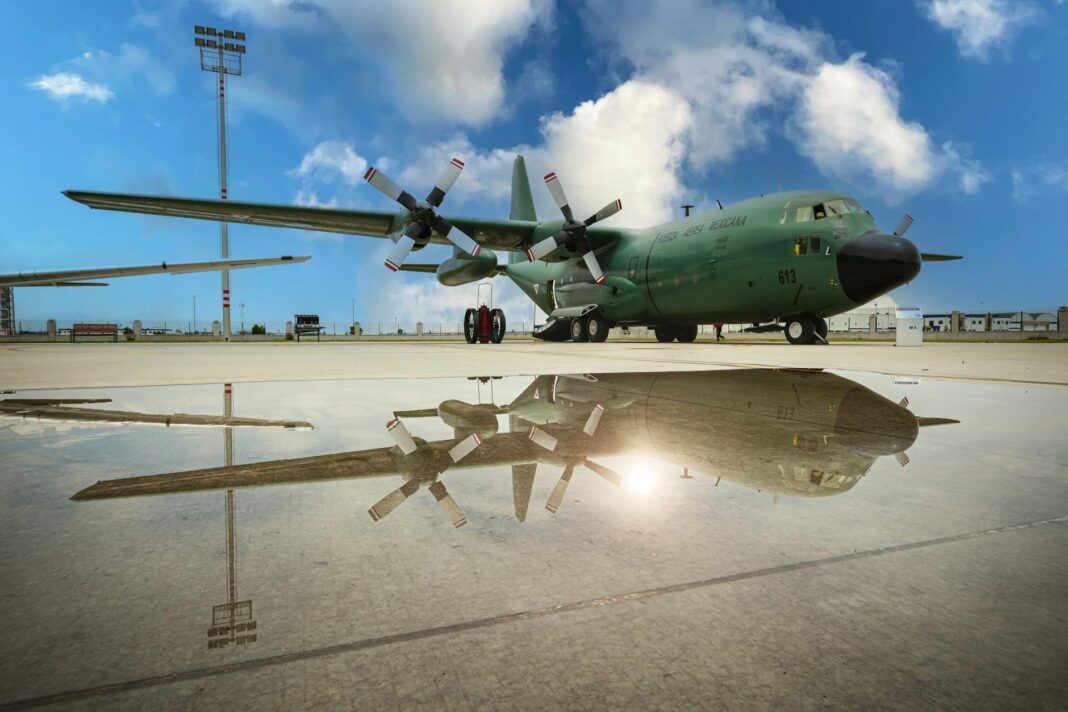

A man in his forties breached security at Shannon Airport in Ireland, climbed onto the wing of a United States Air Force C-130 Hercules transport aircraft, and attacked its fuselage and wing with a hatchet. The airport was shut down for thirty minutes. Flights were delayed. The aircraft, valued at approximately $75 million and belonging to the 139th Airlift Wing of the Missouri Air National Guard, sustained damage. The man was arrested under Section 4 of the Criminal Justice Act.
Whether what happened next is a security story, a political story, or something else entirely depends on where you are standing when you read about it.
Hero or Lunatic: The Atlantic Divide
The Canary, a British left-leaning outlet, described the man as a “hero.” RedState, an American conservative publication, called him a “hatchet-wielding nut.” The same act. The same airport. The same hatchet. Two completely irreconcilable narratives, separated not by facts but by the political assumptions that determine which facts matter.
This divergence is not new, and it is not accidental. Shannon Airport has been one of the most contested pieces of infrastructure in Irish public life for more than two decades. The airport serves as a refueling and transit point for US military aircraft, a function that has placed Ireland’s declared neutrality under sustained scrutiny. For critics, Shannon represents the quiet complicity of a nominally neutral nation in American military operations abroad. For defenders, it represents a pragmatic arrangement that sustains jobs and transatlantic relations.
The Precedent That Matters
This was not the first time someone attacked a US military aircraft at Shannon with a bladed tool. In 2003, peace activist Mary Kelly used an axe to damage a US Navy aircraft at the airport in protest against the invasion of Iraq. She was acquitted by a jury, a verdict that sent shockwaves through the legal and diplomatic establishment. As recently as 2025, additional activists damaged US-linked planes at the facility.
The pattern is worth noting. These are not random acts of vandalism. They are politically motivated actions targeting a specific category of aircraft at a specific airport, driven by a specific and longstanding objection to Shannon’s role in facilitating American military logistics. Whether one agrees with the objection or not, dismissing it as mere criminality requires ignoring the consistency of the motive and the history behind it.
The Security Question
There is also the matter of how a man with a hatchet was able to reach a military aircraft on an active runway. The C-130 was en route to a military exercise in Poland. It was a military asset, parked at a civilian airport, in a country that officially maintains a policy of military neutrality. The security breach raises questions that go beyond the actions of one individual. How was the perimeter compromised? What protocols existed for protecting military aircraft at a civilian facility? And if a single person with a hand tool can shut down an international airport for half an hour, what does that suggest about the vulnerability of similar arrangements elsewhere?
The Deeper Fault Line
Shannon has always been the place where Ireland’s self-image as a neutral nation collides with its operational reality as a partner in Western military infrastructure. The Irish government has consistently maintained that military transit through Shannon does not compromise neutrality, a position that requires a fairly specific definition of neutrality. Opponents argue that allowing warplanes to refuel on Irish soil while those planes participate in foreign conflicts is neutrality in name only.
The man with the hatchet did not resolve this debate. But he did, for thirty minutes, make it impossible to ignore. One person, one tool, one act of determined trespass, and a $75 million military aircraft was damaged, an airport was paralyzed, and the argument that has simmered in Irish politics for a generation was forced back to the surface.
Is he a hero or a criminal? The honest answer is that the question itself reveals more about the person answering than about the man on the wing.