
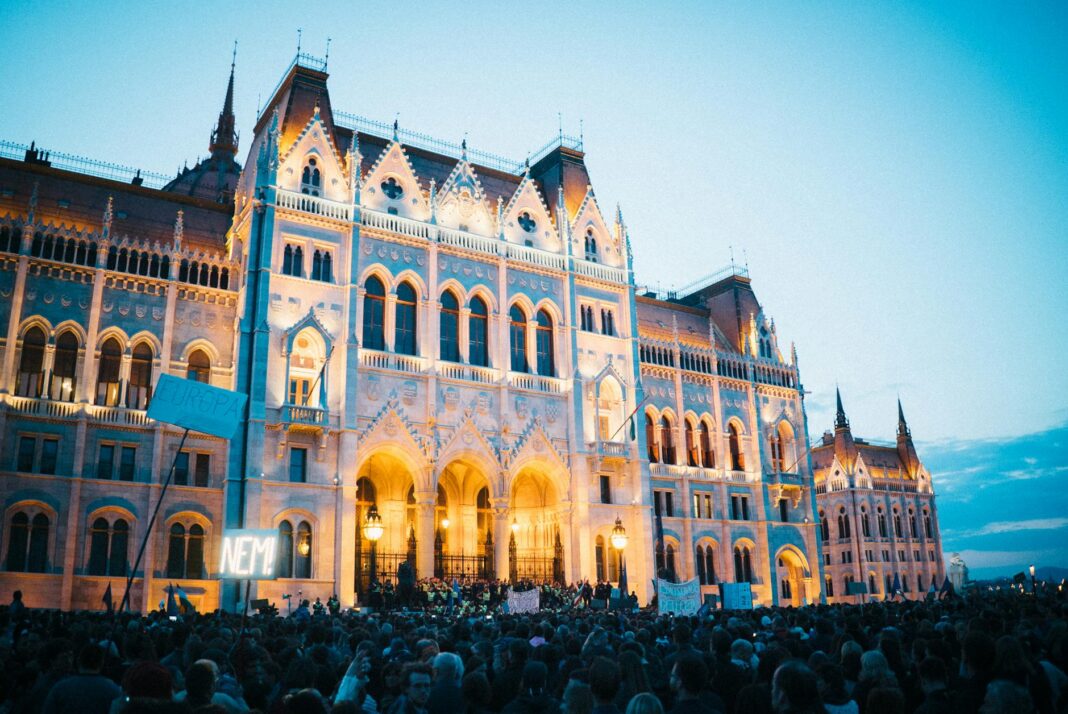

For more than a decade, Viktor Orban warned that George Soros wanted to take over Hungary. Western media called it a conspiracy theory. Watchdog organizations called it antisemitic. Orban’s critics dismissed the claim as a cynical fabrication designed to manufacture an external enemy for domestic political consumption.
Then Peter Magyar’s pro-EU Tisza party won 138 of 199 parliamentary seats with 53.6 percent of the vote. Orban’s Fidesz was reduced to 55 seats. Sixteen years of rule ended in a single night. Voter turnout approached 80 percent. And Elon Musk posted five words that captured the moment with a bluntness that diplomatic language would never permit: “Soros Organization has taken over Hungary.”
At what point does a conspiracy theory become an observation?
The Numbers Behind the Narrative
Between 2016 and 2023, the Open Society Foundations, the philanthropic network founded and funded by George Soros, spent approximately $90 million on Hungarian organizations. That figure is nearly double the European per-country average for OSF spending during the same period. The money went to civil society groups, media organizations, legal advocacy networks, and educational institutions.
None of this was secret. The Open Society Foundations publish their spending. The organizations that received funding operate openly. The question was never whether the money existed. The question was whether it constituted the kind of coordinated influence operation that Orban described, or whether it was simply philanthropic support for democratic institutions, as Soros and his allies maintained.
The election result does not definitively answer that question. But it does make it considerably harder to dismiss.
The Candidate
Peter Magyar has pledged to dismantle Orban’s policy architecture and realign Hungary with the European Union and NATO. His campaign positioned itself as a restoration of European norms after what it characterized as Orban’s authoritarian drift. The scale of his victory, a supermajority that gives Tisza the power to amend the constitution, suggests either a genuine popular mandate for change or an extraordinarily well-resourced political operation. Possibly both.
Magyar’s alignment with EU institutions and his rhetorical framework are consistent with the political orientation that Open Society-funded organizations have promoted in Hungary for years. This does not mean he is a puppet, and reducing a democratic election to a foreign influence operation would be as reductive as denying that foreign influence played any role at all. But the alignment between the policy vision Magyar represents and the policy vision that $90 million in Soros-linked spending promoted is not a coincidence that can be wished away.
The Timing
Days before the election, Orban accused Facebook of interfering in the Hungarian electoral process. The accusation received little international attention at the time. In retrospect, it reads as the last move of a political leader who understood that the ground had shifted beneath him. Whether his claim about Facebook had merit is a separate question, but the pattern of a leader alleging foreign interference in the final days before a devastating loss is one that the West has seen before, in other contexts, and treated with very different levels of seriousness depending on who was making the allegation.
The Inconvenient Alignment
The uncomfortable reality is this: Orban said Soros wanted to take over Hungary. He was mocked for it. Soros-funded organizations spent $90 million in Hungary. A candidate aligned with the political vision those organizations promoted won a supermajority. And the richest man in the world, himself no stranger to political influence operations, confirmed the narrative that polite society had spent years insisting was a fantasy.
None of this means the election was illegitimate. Hungarian voters turned out in extraordinary numbers and made a decisive choice. Democracy functioned. But democracy functioning and democracy being influenced are not mutually exclusive propositions, and the refusal to examine whether $90 million in foreign-linked spending shaped the political landscape in which that democracy functioned is not neutrality. It is incuriosity at best, and complicity at worst.
Orban’s critics spent years insisting he was paranoid. The question now is whether they were wrong, or whether they simply did not care as long as the influence was flowing in a direction they approved of. That distinction matters more than anyone currently seems willing to acknowledge.