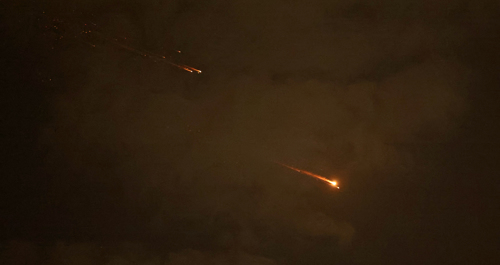

The violence continues to escalate with no visible ceiling. CNN reports that the US-Israeli military campaign against Iran has entered a new phase of infrastructure destruction, with President Trump warning of further strikes while offering no diplomatic framework for resolution. Tehran, through its military command, has responded with characteristic defiance — dismissing Trump’s declarations as “delusional threats” that “will not make up for US humiliation in West Asia.”
The exchange captures the current impasse with uncomfortable clarity. Washington destroys and threatens more destruction. Tehran absorbs and promises retaliation. Neither side has articulated what victory looks like. Neither side has identified an off-ramp. And the civilian infrastructure of a nation of 88 million people is being systematically dismantled in the space between their competing narratives.
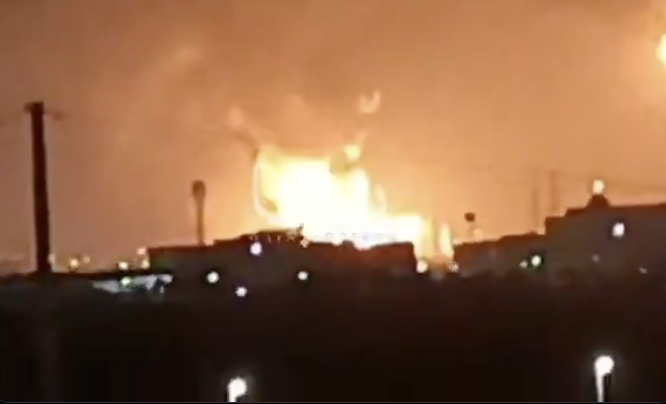
Iran’s military statement, reported by PressTV, frames the conflict through a lens of resilience and asymmetric capability. The language is deliberate: “humiliation” implies that despite overwhelming American firepower, the strategic outcome is not what Washington promised. The Strait of Hormuz remains disrupted. Oil sits above $135. A Kuwaiti refinery has been hit. Twenty thousand sailors remain stranded. The world economy buckles while the Pentagon claims ninety percent success and its own intelligence agencies put the figure at fifty.
Related: NewsRescue — Pentagon Intelligence Says Only Half of Iran’s Weapons Destroyed
The question that hangs over this conflict — and that no official on either side is willing to address publicly — is what happens when conventional escalation reaches its limit. The United States has deployed its most advanced conventional weapons systems. Iran has demonstrated that its dispersed military infrastructure and proxy networks can sustain punishment and continue operating. Neither side is achieving the decisive outcome that would bring the other to the table.
When conventional warfare fails to produce capitulation, history offers a limited menu of outcomes: prolonged attrition, negotiated settlement, or escalation beyond the conventional threshold. The first means years of destruction. The second requires political will that neither leader has demonstrated. The third is the scenario that defense analysts discuss in private but that public discourse has been reluctant to name directly.
Will nuclear weapons enter the calculus? Israel possesses an undeclared arsenal estimated at 80 to 400 warheads. The United States has the largest nuclear stockpile on earth. Iran has been accused — without conclusive public evidence — of pursuing nuclear capability. The architecture for catastrophic escalation exists. The institutional safeguards against it — the generals who would counsel restraint — are being systematically removed from command positions.
Related: NewsRescue — Hegseth Fires Army Chief as Generals Resist Ground Invasion of Iran
There is a parallel that the architects of this war would prefer not to be drawn. When civilian infrastructure is deliberately and systematically targeted — bridges, power grids, water systems, schools — the distinction between state military action and what non-state actors are condemned for becomes difficult to maintain. The Geneva Conventions do not differentiate based on the flag of the attacking force. A destroyed bridge is a destroyed bridge. A bombed school is a bombed school. The legal framework applies equally, regardless of whether the ordnance was delivered by a recognized military or a designated terrorist organization.
The United States has spent two decades defining its adversaries by their willingness to target civilian infrastructure. It has invaded countries, imposed sanctions, and restructured entire regions on the basis that deliberately destroying civilian life-support systems constitutes an act of terror. The question of whether that standard applies to the current campaign against Iran is one that international legal institutions will eventually be asked to answer.
Iran’s response — defiant, measured in its own framework, continuing to strike through proxy networks while absorbing direct bombardment — suggests that Tehran has concluded this conflict will be long. The “delusional threats” framing is not mere rhetoric. It reflects an assessment that American escalation dominance has limits, and that those limits are being reached faster than Washington anticipated.
What comes next depends on decisions being made by a shrinking circle of individuals in Washington and Tehran. The generals who might counsel restraint have been fired. The diplomats who might negotiate an off-ramp have been sidelined. The international institutions that might mediate have been paralyzed. What remains is the logic of escalation, operating in an environment where the usual checks have been removed.
The world watches. The oil price climbs. The infrastructure burns. And the question that no one in power is willing to answer — where does this end? — grows more urgent with each passing day and each destroyed bridge.