
How long does a ceasefire have to last before it can reasonably be called a ceasefire? In the case of the US-Iran agreement, the answer appears to be somewhere south of twelve hours.
Iran has formally accused the United States of violating the framework of the ceasefire deal that was supposed to de-escalate one of the most dangerous confrontations in the Persian Gulf in decades. The accusation came as oil tankers that had briefly resumed passage through the Strait of Hormuz were halted again — stopped within hours of being allowed to transit for the first time since hostilities intensified.
Two Versions of the Same Deal
At the center of the dispute is a remarkably fundamental disagreement: what, exactly, was agreed upon. Iranian officials have stated that the plan published by Tehran is “not the one approved as a basis for talks,” a claim the United States firmly disputes. If both sides cannot even agree on the text of their agreement, one might ask what precisely was signed and by whom.
CBS News reported that Iran accused the US of “violating ceasefire deal framework as Israeli attacks on Lebanon continue.” NBC characterized the ceasefire as “fragile,” noting “some new attacks” hitting the Gulf region. CNN described the situation as a “fragile ceasefire being tested as Iranian official alleges infractions.” The language across American networks tells its own story — the word “fragile” doing considerable work to prepare audiences for the possibility that what was announced with such fanfare may already be collapsing.
The Tankers That Moved, Then Didn’t
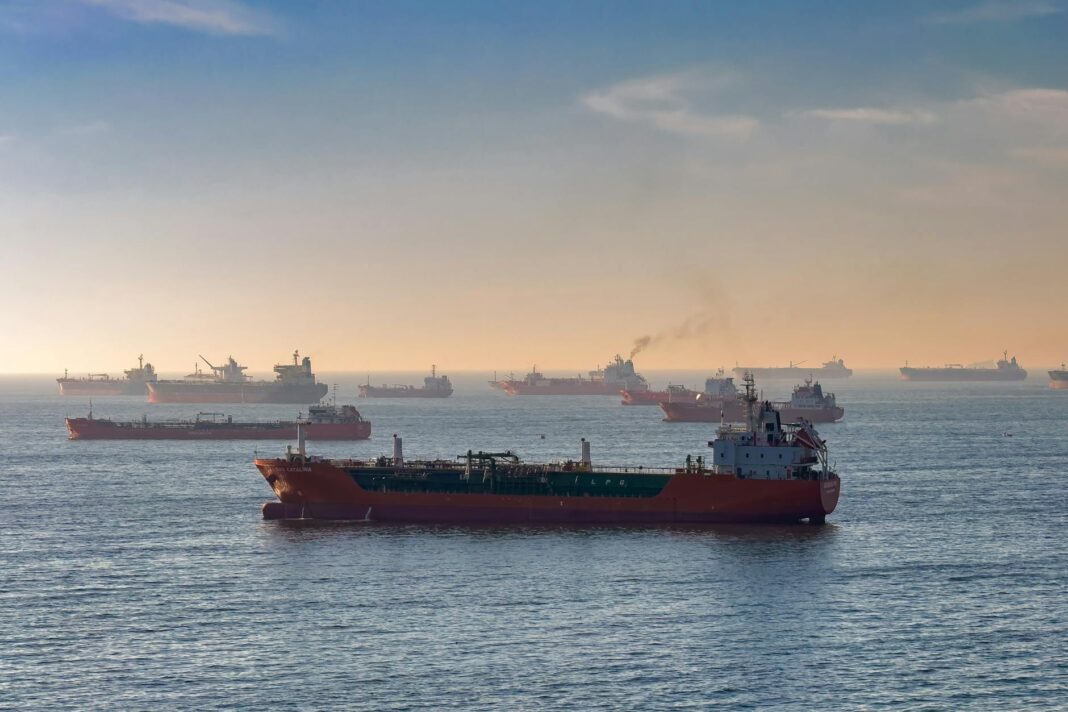
Perhaps the most telling detail in this unraveling is what happened at Hormuz. The first tankers had been allowed to pass — a tangible, visible signal that diplomacy was producing results. Global oil markets had begun to recalibrate. And then, hours later, the passage was halted again, reportedly after Israeli strikes on Lebanon continued unabated. The message from Tehran was unmistakable: if the broader military picture does not change, neither will the strait.
For the millions of people worldwide whose energy costs are tied to what happens in that narrow waterway, this is not an abstraction. It is the difference between stability and another spike in prices that ripples through every economy on earth.
Both Sides Claim Victory
In Washington, Pentagon chief Pete Hegseth declared that the military “has done its part for now” — a statement that manages to simultaneously claim credit and disclaim future responsibility. Both the US and Iran have publicly characterized the deal as a victory for their respective positions. When both parties to a conflict claim to have won the same negotiation, it is worth asking whether either side has actually conceded anything at all.
The Trump administration has framed the ceasefire as evidence of successful maximum pressure. Tehran has presented it as proof that American aggression was forced to the negotiating table. These narratives are not just different — they are mutually exclusive. And mutually exclusive victory narratives have a way of producing the next round of conflict rather than preventing it.
What the Speed of Collapse Reveals
There is something instructive about the velocity with which this agreement began to fracture. Ceasefires that are genuinely built on mutual understanding tend to hold through initial provocations. Ceasefires that are constructed primarily for domestic political consumption — designed to allow both leaders to stand before cameras and declare triumph — tend to collapse the moment the cameras turn away.
The question now is not whether the ceasefire will hold. The tankers have already stopped. The accusations have already been made. The question is whether either Washington or Tehran considers this particular agreement worth salvaging, or whether it was always intended to be a pause rather than a peace — a moment to reload rather than to reflect.
Friday’s talks in Islamabad may provide an answer. But the speed with which both sides reached for blame suggests that neither arrived at this ceasefire expecting it to last.