
While presidents give speeches and generals move pins on maps, 20,000 human beings are trapped in the Persian Gulf with no way out. They are not soldiers. They are not spies. They are not combatants of any kind. They are merchant sailors — working-class men and women from the Philippines, India, Bangladesh, Nigeria, Kenya, and dozens of other developing nations — who went to sea to feed their families and now find themselves prisoners of a war that has nothing to do with them.
They have been stranded for over a month.
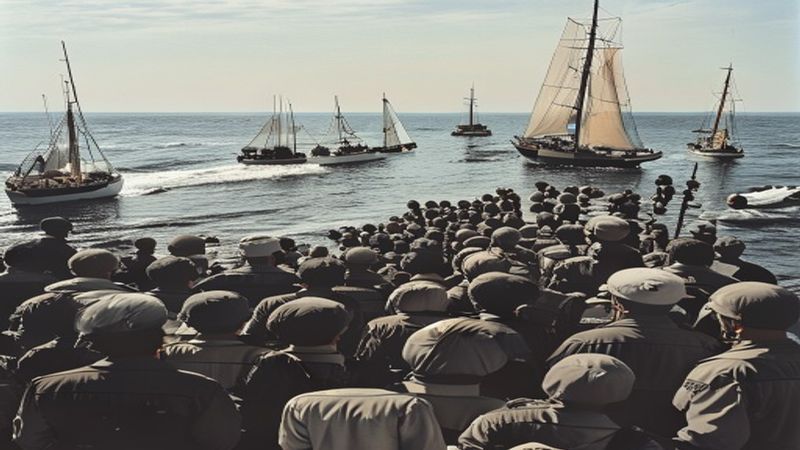
Iran’s military posture has effectively blocked safe passage through the Strait of Hormuz, the narrow waterway connecting the Persian Gulf to the open ocean. Commercial vessels cannot move. Cargo ships sit idle. Oil tankers are anchored in place. And on board those ships, thousands of sailors wait — running low on food, on fuel, on hope.
The International Maritime Organization has raised the alarm. Shipping companies have issued distress calls. Maritime unions have begged for intervention.
And the world has responded with a collective shrug.
These are not the people who start wars. These are the people who carry the goods that keep the global economy running — the rice, the oil, the machinery, the medicine. They are the invisible backbone of international trade, and they have been abandoned.
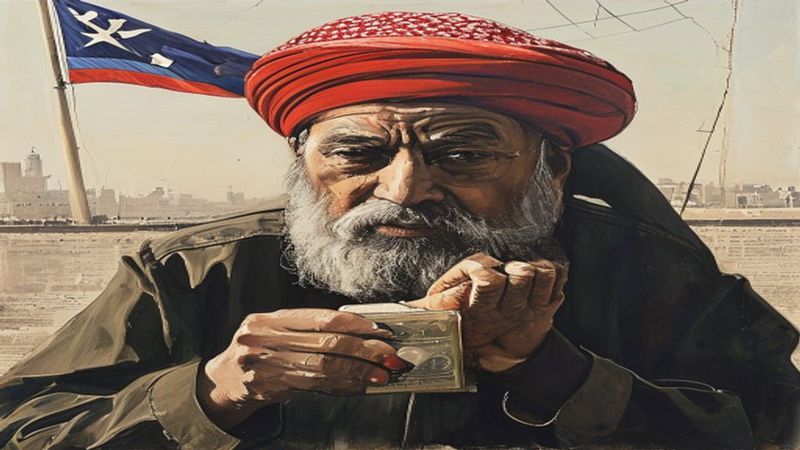
Consider who these sailors are. A Filipino deckhand who left his village in Mindanao because there were no jobs. An Indian engineer from Kerala supporting his parents and two children on a maritime salary. A Nigerian able seaman from Lagos who sends money home every month so his younger siblings can stay in school. These are not people with political connections or powerful governments to advocate for them. These are the global working poor — and their disposability is the point.
When Western citizens are stranded abroad, governments mobilize. Embassies activate. Special flights are arranged. CNN runs countdown clocks. The entire machinery of state power lurches into action.
When Filipino, Indian, and African sailors are stranded in a war zone, it barely makes the news.
This is not an oversight. It is a reflection of whose lives the international system considers valuable and whose it does not. The 20,000 sailors in the Persian Gulf are from countries that lack the geopolitical weight to demand action from the belligerents. The Philippines cannot force the United States or Iran to open a humanitarian corridor. Nigeria cannot compel the UN Security Council to act. India — despite its size — has calculated that confronting Washington over stranded seamen is not worth the diplomatic cost.
And so these men and women wait. On rusting ships. In blistering heat. With dwindling supplies and no information about when — or if — they will be able to go home.
As NewsRescue has consistently argued, the true cost of war is never measured in missile counts or territory gained. It is measured in the lives of ordinary people — people who are never consulted before the shooting starts and never compensated after it ends.
The sailors stranded in the Persian Gulf are a perfect microcosm of how modern warfare works. The decision-makers sit in Washington, Tehran, and Tel Aviv. The profits flow to defense contractors and oil speculators. And the suffering falls on the people least equipped to bear it — the poor, the powerless, the invisible.
Some of these sailors have not spoken to their families in weeks. Communication systems on commercial vessels are limited, and many ships have lost reliable internet access as the conflict has intensified. Families in Manila, Mumbai, and Mombasa are left to wonder whether their husbands, fathers, and sons are alive.
This is what war looks like when you strip away the flags and the speeches. Not smart bombs hitting military targets on a Pentagon briefing screen. Not a president pounding his fist on a podium. Just 20,000 forgotten people, floating in a war zone, waiting for someone powerful enough to care.
The question is not whether the international community has the ability to establish a humanitarian corridor through the Strait of Hormuz. It clearly does. The U.S. Navy, which dominates the Gulf, could escort civilian vessels to safety if it chose to. Iran could agree to safe passage for non-military ships if pressured to do so.
The question is whether anyone considers these lives worth the effort. So far, the answer has been no.
Twenty thousand sailors. Over a month. And the world looks the other way. If that does not tell you everything you need to know about who this war is for — and who it is not for — nothing will.