
President Donald Trump has postponed a planned Tuesday strike on Iran after the rulers of Saudi Arabia, Qatar, and the United Arab Emirates personally appealed for time, telling the White House they were “very close” to a deal with Tehran.
“I put it off for a little while, hopefully maybe forever,” Trump said Sunday at a healthcare event, after calls from Crown Prince Mohammed bin Salman, Qatar’s Emir Tamim bin Hamad Al Thani, and UAE President Mohamed bin Zayed Al Nahyan. The three monarchs asked for “two or three days” to finish quiet diplomacy.
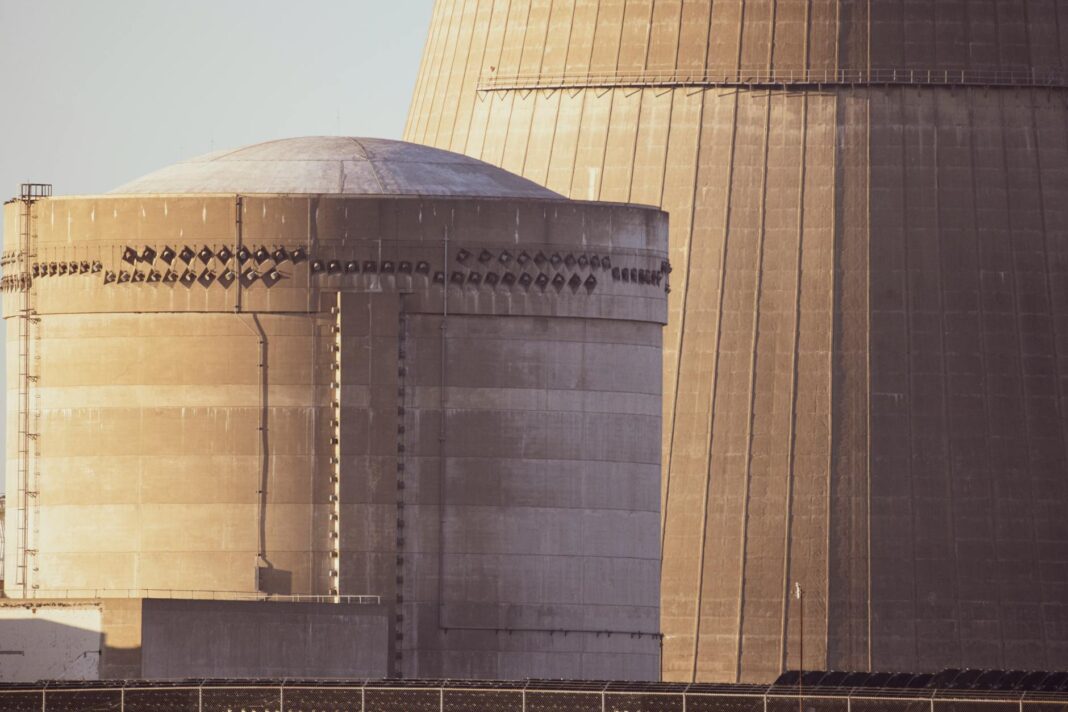
The plea did not arrive in a vacuum. Hours earlier, three drones had crossed into UAE airspace from the west and made for the Barakah Nuclear Power Plant in Al Dhafra – the only reactor in the country. Emirati air defenses shot down two. The third struck an electrical generator outside the inner perimeter. No injuries, no radiation leak. No claim of responsibility.
The same Sunday, Saudi Arabia intercepted three more drones inbound from Iraqi airspace.
Iran denied involvement. Foreign Minister Abbas Araghchi did not exactly leave the matter there: “The truth is that the UAE was directly involved in the aggression” against Iran during the February 28 US-Israeli bombing campaign, he said. The Wall Street Journal reported during that conflict that Emirati assets had carried out covert strikes on Iranian targets.
The UAE’s only reactor powers Abu Dhabi’s grid. The Gulf monarchies have long counted on American firepower to keep Iran at a safe distance from their oil fields, their cities, their critical infrastructure. The Barakah strike – claimed by no one and denied by Tehran – left that arrangement looking thinner than it had on paper.
Their answer to Washington this week was: please, not yet.
Iran has not been idle elsewhere. Tehran has stood up a “Persian Gulf Strait Authority” to police transit through the Strait of Hormuz. US Central Command says it has rerouted eighty-five commercial vessels and disabled four since the blockade began. Through Pakistani mediators, Iran has tabled a fourteen-point proposal for ending the standoff – with no concession on its nuclear program.
Israel, meanwhile, carried out thirty airstrikes in Lebanon over the weekend and killed an Islamic Jihad commander.
Trump’s pause is not a withdrawal. “The clock is ticking,” he warned Iran on Saturday. On Sunday, asked about gasoline prices at a Kentucky rally, he answered: “Gasoline is going to come tumbling down as soon as the war is over.” The war he names is not yet at an end – only on hold, at the request of allies who, for the first time in a long time, are not sure they want it to start.