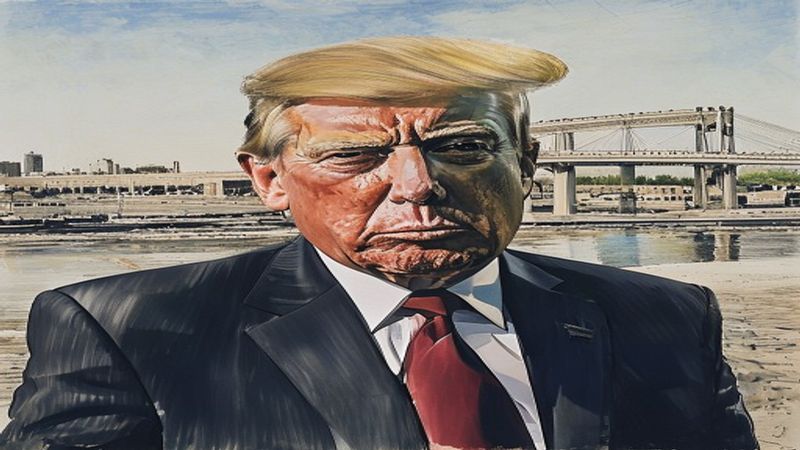

The violence continues. On day 35 of the US-Israeli military campaign against Iran, the destruction of the country’s largest bridge — a critical civilian infrastructure link between major population centers — drew not condemnation from the White House but celebration. President Trump declared that the assault on Iranian infrastructure “hasn’t even started yet,” framing five weeks of sustained bombardment as merely a prelude.
The bridge was not a military installation. It carried commuters, food shipments, medical supplies, and families. Its destruction severs supply routes that millions of Iranians depend on for daily survival. The strike was confirmed by multiple sources including Reuters and Al Jazeera, with satellite imagery showing the structure collapsed into the waterway below.
Trump’s brazen declaration of pride in the destruction signals an escalation doctrine with no visible ceiling. If 35 days of bombing — including the strike on a girls’ school that killed over 100 children — constitutes the beginning, the full scope of what is planned defies reasonable projection.
🚨 TRUMP BIG WARNING TO IRAN 🚨
TRUMP SHARES FOOTAGE OF IRAN’S MAJOR BRIDGE DESTROYED.
SAYS: "MUCH MORE TO FOLLOW."
"MAKE A DEAL BEFORE IT’S TOO LATE OR NOTHING WILL BE LEFT." https://t.co/Dnuvp4trj4 pic.twitter.com/jqtpMkiHwa
— Money Ape (@TheMoneyApe) April 2, 2026
Related: NewsRescue—Pentagon Intelligence Says Only Half of Iran’s Weapons Destroyed
Iran, in what Tehran defines as measured self-restraint, does not cower. The Islamic Republic continues to strike back across the region. This week alone, Iranian-linked forces hit a Kuwaiti oil refinery — the first confirmed attack on a Gulf Cooperation Council state since the conflict began. Houthi forces in Yemen have intensified strikes on Red Sea shipping. Hezbollah has escalated operations along the Lebanese border. Iraqi militias have targeted US positions in Syria and Iraq.
While the damage is definitively disproportionate — Iran’s civilian infrastructure is being systematically dismantled while the US homeland remains untouched — Tehran has demonstrated that it will not absorb punishment passively. The Strait of Hormuz remains effectively blocked, strangling global oil flows and holding the world economy hostage to a conflict most nations want no part of.
Related: NewsRescue—Kenyans Eating Tree Bark as Iran War Oil Shock Compounds Famine
The undue punishment extends far beyond Iran’s borders. Oil has surged past $135 a barrel. Germany’s gas prices have spiked 60 percent. African nations are rationing electricity and diluting petrol. Twenty-six million East Africans face extreme hunger as food aid logistics collapse under the weight of fuel costs. Twenty thousand civilian sailors remain stranded in the Persian Gulf, trapped in a floating prison the international community has chosen to ignore.
The United Nations, the International Court of Justice, the mechanisms of international law that were built precisely to prevent this kind of unchecked aggression — none have demonstrated the capacity to intervene. The Security Council is paralyzed by the US veto. The ICC moves at the pace of years, not days. The General Assembly passes resolutions that carry moral weight but no enforcement power.
There is no equitable path to justice for the provocateurs through existing institutions. That is not a statement of opinion. It is a description of the structural reality that 35 days of documented civilian infrastructure destruction, verified school bombings, and confirmed bridge demolitions have produced no meaningful international response beyond statements of concern.
Related: NewsRescue—Ex-FM Zarif Says Iran Should Declare Victory and Make a Deal
The war enters its sixth week with no off-ramp in sight. Trump says this is the beginning. Iran says it will not surrender. The institutions designed to stop this have failed. And the people paying the highest price — in Tehran, in Beirut, in Nairobi, in Islamabad, on cargo ships in the Persian Gulf — have no voice at the table where this war could be ended.
The bridge is gone. The president calls it a preview. The world watches, and the cost compounds daily for those who can least afford it.