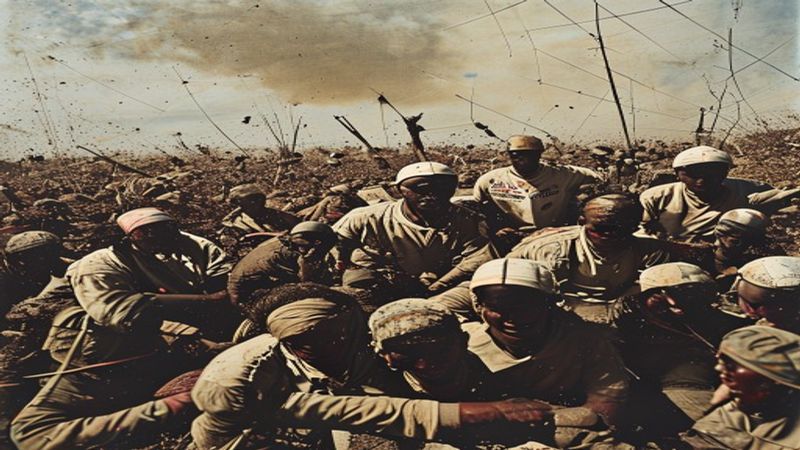

More than 70 miners have been killed in South Sudan in what is being described as one of the worst single massacres in the country this year. As bodies are still being counted and families search for the missing, the government and opposition forces are locked in a predictable cycle of finger-pointing, each blaming the other for the carnage.
And the world? The world has moved on to the next news cycle. Because 70 dead Africans, apparently, do not warrant the same wall-to-wall coverage that a single incident in Europe or North America commands.
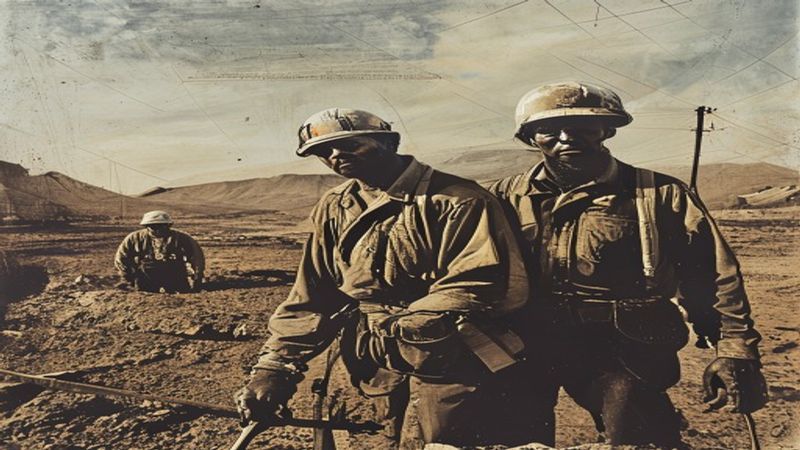
The killings took place in a mining area in South Sudan’s resource-rich interior, where artisanal miners — many of them young men with no other economic options — dig for gold and other minerals under dangerous conditions. Reports indicate that armed men attacked the mining site, killing indiscriminately. Survivors describe scenes of terror, with miners gunned down as they tried to flee.
South Sudan’s government issued a statement condemning the attack and attributing it to opposition-aligned forces. The opposition, in turn, accused government-linked militias of carrying out the massacre to consolidate control over lucrative mining areas. Neither side has provided verifiable evidence. Neither side has a credible track record of telling the truth.
“We condemn this barbaric act and hold the opposition responsible for the senseless murder of innocent civilians,” a government spokesperson said in a statement to local media.
Opposition leaders fired back: “This is a deliberate campaign by government forces to seize mineral wealth. The blood of these miners is on the hands of the regime.”
This is the tragic script that South Sudan has followed since its independence in 2011. The world’s youngest nation was born in hope — celebrated as a triumph of self-determination after decades of war with Khartoum. But that hope curdled almost immediately. By 2013, a power struggle between President Salva Kiir and his former deputy Riek Machar plunged the country into a civil war that has claimed an estimated 400,000 lives.
The so-called resource curse is central to understanding why South Sudan bleeds. The country sits on significant reserves of oil, gold, and other minerals. Instead of funding development, these resources have become prizes to be fought over by armed factions. Mining areas are contested territories. Whoever controls the mines controls the money. And money, in South Sudan, means power — and the weapons to keep it.
International observers, including the United Nations Mission in South Sudan (UNMISS), have documented systematic human rights abuses linked to resource extraction. A 2025 UN report noted that armed groups on all sides of the conflict routinely target mining communities, using forced labor, extortion, and mass violence to maintain control over mineral-rich areas.
But here is the question that burns: where is the international outrage?
When a terror attack kills a dozen people in a European capital, the world stops. Flags are lowered. Hashtags trend. World leaders issue statements of solidarity. News networks run 24-hour coverage. Vigils are held from New York to Tokyo.
When 70 miners are massacred in South Sudan, it barely registers as a footnote. No special UN session. No emergency G7 statement. No candlelight vigils outside embassies. The implicit message is clear and devastating: African lives are valued less.
This is not a new observation, but it demands repeating because the pattern never changes. The Darfur genocide. The Congolese conflict that has killed millions. The Boko Haram insurgency. The Tigray war. Each of these crises has produced death tolls that dwarf many of the conflicts that dominate Western headlines, yet they receive a fraction of the attention.
South Sudan’s tragedy is compounded by the role of external actors. International oil companies have long operated in the country, extracting wealth while communities burn. Arms flow into South Sudan from neighboring countries and beyond, fueling the very violence that makes headlines only when the death toll is too large to ignore — and sometimes not even then.
The African Union, too, bears responsibility. Regional bodies have proven incapable or unwilling to impose meaningful consequences on South Sudan’s warring factions. Peace agreements are signed and broken with monotonous regularity. The Revitalized Agreement on the Resolution of the Conflict in South Sudan, signed in 2018, was supposed to end the fighting. It has not.
Seventy miners are dead. Their names will not trend on social media. Their faces will not appear on magazine covers. No world leader will mention them in a speech. They will be absorbed into the grim statistics of a conflict the world has chosen to forget.
If this massacre had happened in a European mining town, we would know every victim’s name by now. The fact that we do not — and likely never will — tells you everything you need to know about whose lives the international community considers worthy of mourning.