
Across the African continent, the devastating ripple effects of the military conflict between the United States and Iran are being felt in the most visceral way possible: rolling blackouts, fuel rationing, and — in some of the most desperate cases — the deliberate dilution of petrol with cheaper additives to stretch dwindling supplies.
Africa did not start this war. Africa has no say in this war. But Africa is paying for it.
The conflict, which has disrupted shipping through the Strait of Hormuz — the narrow waterway through which roughly 20 percent of the world’s oil supply passes daily — has sent global crude prices surging past $120 per barrel. The spike accelerated dramatically after President Trump’s nationally televised address last week, in which he signaled an expansion of military operations against Iranian nuclear facilities. Markets reacted with panic. Oil futures soared.
For wealthy nations with strategic petroleum reserves and diversified energy portfolios, the price surge is painful but manageable. For most African countries, it is an economic catastrophe.
“We are facing an energy emergency,” Kenya’s Energy Minister told parliament this week. “We have been forced to implement load-shedding schedules that will affect all sectors of the economy. We ask Kenyans for patience.”
Kenya is far from alone. Ghana has announced a return to the “dumsor” — the Ghanaian term for the rolling blackouts that plagued the country between 2012 and 2016. Senegal has imposed restrictions on industrial power consumption. Tanzania has cut electricity to rural areas to preserve supply for Dar es Salaam. Even Nigeria, Africa’s largest oil producer, is struggling — its decrepit refining infrastructure means it imports the majority of its refined fuel, and those imports just became dramatically more expensive.
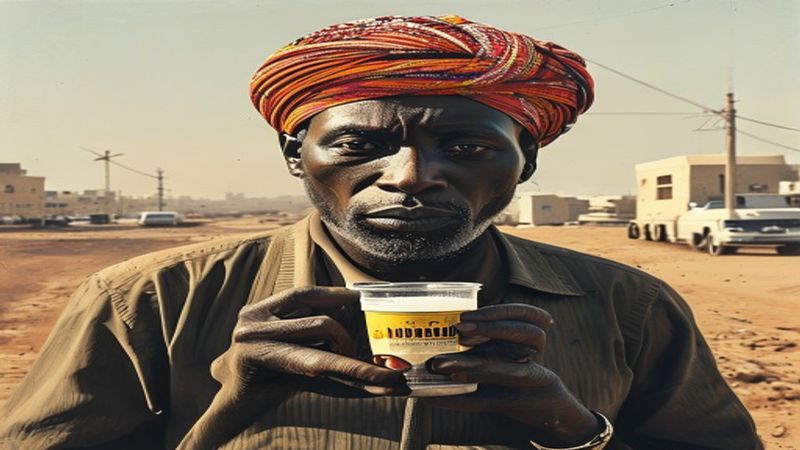
The most alarming reports come from East Africa, where fuel distributors in several countries have been caught diluting petrol with kerosene and other cheaper substances to stretch supply. The practice is dangerous — diluted fuel damages engines, increases emissions, and poses explosion risks — but desperate suppliers see no alternative when they cannot secure enough product at prices their customers can afford.
“We know it is not safe,” a fuel distributor in Uganda admitted to a local journalist. “But what is the alternative? We have no fuel. People cannot get to work. Hospitals cannot run generators. We do what we must.”
The human cost is staggering and immediate. Hospitals across the continent are reporting disruptions as backup generators run dry. Water treatment plants that depend on electricity are failing, threatening clean water supplies. Farmers cannot transport goods to market. Schools that rely on solar-charged batteries supplemented by grid power are going dark.
Africa’s vulnerability to externally driven oil price shocks is a structural problem decades in the making. Despite sitting on vast energy resources — oil in Nigeria, Angola, and Libya; natural gas in Mozambique and Tanzania; enormous solar and hydroelectric potential across the continent — Africa has systematically failed to develop the energy infrastructure needed to insulate itself from global market volatility.
Refining capacity tells the story most starkly. Africa produces roughly 8 million barrels of crude oil per day but can refine only a fraction of that domestically. The rest is exported as raw crude and imported back as refined products at a massive markup. It is the most self-defeating economic arrangement imaginable, and it has persisted for decades because of corruption, mismanagement, and the perverse incentives created by import-dependent fuel subsidy systems.
The Dangote Refinery in Nigeria — which was supposed to transform this picture — has helped, but one facility cannot serve an entire continent. Africa needs dozens of refineries, massive investment in renewable energy, and modernized power grid infrastructure. None of that will materialize in time to address the current crisis.
The geopolitical dimension is impossible to ignore. The war disrupting African lives was initiated by powers that have never consulted Africa, do not consider African interests in their strategic calculations, and will not compensate Africa for the damage their conflict causes. The United States did not ask a single African nation for input before launching strikes on Iranian facilities. Iran did not consider the impact on African oil markets when it escalated its nuclear program.
Africa is, as it has been for centuries, collateral damage in other people’s wars.
The African Union has issued a statement calling for de-escalation and expressing concern about the humanitarian impact of rising energy prices on the continent. It is a reasonable statement. It will accomplish nothing. The combatants in this conflict do not care about African Union statements.
What Africa needs is energy sovereignty. The ability to produce, refine, and distribute its own energy without dependence on global supply chains controlled by powers that view the continent as an afterthought. Every dollar spent on importing refined fuel is a dollar that could have been invested in domestic refining capacity, solar installations, or grid modernization.
Until that sovereignty is achieved, Africa will continue to ration power, dilute its fuel, and watch its economies stagger every time distant powers decide to go to war. The lights go out in Nairobi and Accra and Dar es Salaam so that strategic objectives can be pursued in Tehran and Washington.
That is the world order in 2026. And Africa, as always, is expected to suffer in silence.